
Dedication. Expertise. Passion.
Each day we strive to achieve as many developmentally appropriate activities as we can. Sometimes things may change, or we swap part of the day through need or discussion. The flexibility allows room for genuine curiosity and exploration. So generally, our schedule can have a 30 min. wobble if needed and parts of the day may or may not happen due to that. I do my best to be as consistent as possible with these guys though as they thrive on a consistent routine. This is how I keep them busy and out of trouble. If your child stays on for a good amount of time I can usually have them reading and doing math and hitting all their benchmarks in time for kindergarten.

7:30 AM
Free Play
Benefits of Free Play in Early Learning settings:
-
Encourages creativity and imagination: Free play allows children to invent stories, pretend, and create—building their creative thinking skills.
-
Builds decision-making skills: When children choose how and what to play, they learn to make choices and solve problems independently.
-
Supports social development: Playing with others helps children practice sharing, taking turns, resolving conflicts, and building friendships.
-
Boosts emotional growth: Free play gives children a healthy outlet to express feelings, manage stress, and build self-confidence.
-
Strengthens physical skills: Active play like running, climbing, or building helps develop gross and fine motor skills.
-
Promotes language development: Through play, children use and hear new words, tell stories, and communicate with peers.
-
Encourages curiosity and exploration: Children learn best when they’re exploring things that interest them in a hands-on way.
-
Lays the foundation for academic learning: Free play fosters focus, perseverance, and a love of learning—all important for school readiness.

8:00 AM
Drawing Time
Several follow-along drawing videos are chosen by the group each day. Creating an epic portfolio by the end of the year.
Benefits of Learning to Draw in Early Learning settings:
-
Building fine motor skills
-
Developing hand-eye coordination
-
Developing creative expression through free drawing
-
Building a foundation for pre-writing skills
-
Building attention span
-
Developing cognitive understanding of concepts
-
Nurturing verbal skills of reading, writing and speaking
-
Closely observing the world around us, recording what we observe and using that as the basis for further enquiry

8:15 AM
Sensory
Benefits of Sensory in Early Learning settings:
-
Supports brain development: Sensory experiences help build neural connections that support cognitive growth and learning.
-
Encourages exploration and curiosity: Engaging the senses helps children naturally explore their environment and ask questions.
-
Develops fine motor skills: Activities like pouring, pinching, or scooping strengthen hand and finger muscles needed for writing.
-
Improves focus and attention: Sensory play helps children self-regulate, which can lead to better concentration during tasks.
-
Builds language skills: As children describe what they feel, see, hear, or smell, they develop vocabulary and communication.
-
Supports emotional regulation: Sensory activities can calm children, reduce anxiety, and help them manage big emotions.

8:30 AM
Music
Benefits of Free Play in Early Learning settings:
-
Strengthens early brain development: Music activates areas of the brain linked to language, memory, and emotional growth.
-
Supports early literacy and language skills: Singing helps children hear rhymes, syllables, and sounds—key for learning to read.
-
Encourages self-expression: Music gives children a safe and joyful way to express their feelings, ideas, and creativity.
-
Improves listening and attention: Following songs, rhythms, and patterns builds focus and auditory skills.
-
Develops motor skills: Clapping, dancing, and playing simple instruments help with coordination and fine/gross motor development.
-
Teaches routines and structure: Songs can signal transitions like cleanup or circle time, helping children feel secure in routines.
-
Promotes social interaction: Group singing and music games build cooperation, sharing, and teamwork.
-
Builds confidence: Participating in music activities boosts self-esteem and encourages children to try new things.

8:45 AM
Writing
Benefits of Writing in Early Learning settings:
-
Builds fine motor skills: Writing activities help strengthen the small muscles in children’s hands and fingers needed for everyday tasks.
-
Develops hand-eye coordination: Drawing, tracing, and writing support visual-motor integration and control.
-
Supports early literacy: Writing helps children understand that spoken words can be represented with letters and symbols.
-
Encourages self-expression: Writing allows children to share their thoughts, ideas, and stories in a personal and meaningful way.
-
Promotes letter recognition: Practicing letters helps children learn their shapes, sounds, and names—key steps toward reading.
-
Teaches focus and perseverance: Writing takes patience and practice, helping children build attention span and persistence.
-
Lays the foundation for future academic success: Early writing skills are closely linked to reading, spelling, and overall school readiness.
-
Boosts confidence and independence: When children see their own words or names on paper, it builds pride and ownership in their learning.

9:00 AM
Coloring
Benefits of Coloring in Early Learning settings:
-
Builds fine motor skills: Coloring strengthens the small muscles in the hands and fingers, which are important for writing and self-help tasks.
-
Improves hand-eye coordination: Staying within lines and choosing where to color helps develop coordination and control.
-
Encourages creativity and imagination: Coloring gives children the freedom to make choices, explore colors, and express their own ideas.
-
Supports early writing skills: Holding and using crayons helps children learn proper pencil grip and control needed for forming letters.
-
Promotes focus and concentration: Coloring requires attention to detail and helps children practice staying with a task.
-
Develops color recognition and awareness: Naming and choosing colors strengthens language skills and early cognitive development.
-
Provides emotional expression and relaxation: Coloring can be a calming activity that helps children manage big feelings.
-
Builds confidence and pride: Finishing a coloring page gives children a sense of accomplishment and boosts self-esteem.


9:15 AM
Cutting
Benefits of Cutting in Early Learning settings:
-
Develops fine motor skills: Cutting strengthens the small muscles in hands and fingers essential for writing and everyday tasks.
-
Improves hand-eye coordination: Following lines with scissors helps children coordinate what they see with their hand movements.
-
Builds bilateral coordination: Using scissors requires both hands to work together—one to hold the paper, the other to cut—boosting teamwork between hands.
-
Supports concentration and focus: Cutting carefully teaches children to pay attention and practice patience.
-
Enhances scissor skills and safety awareness: Learning how to use scissors properly promotes independence and safety habits.
-
Encourages creativity: Cutting shapes and designs allows children to create crafts and explore art in new ways.
-
Lays the groundwork for writing skills: Strengthening hand muscles and coordination through cutting prepares children for pencil control.
-
Boosts confidence and independence: Mastering cutting skills gives children pride and a sense of accomplishment.

9:30 AM
Game Time
Benefits of Game Time in Early Learning settings:
-
Develops social skills: Playing games helps children learn to take turns, share, cooperate, and resolve conflicts.
-
Builds language and communication: Game time encourages talking, listening, and following directions, boosting vocabulary and understanding.
-
Enhances cognitive skills: Many games develop problem-solving, memory, and critical thinking abilities.
-
Supports emotional growth: Games teach children how to handle winning and losing gracefully and manage emotions.
-
Promotes physical development: Active games build gross motor skills like running, jumping, and coordination.
-
Encourages creativity and imagination: Pretend play games allow children to explore different roles and scenarios.
-
Fosters focus and attention: Following rules and staying engaged during games strengthens concentration.
-
Builds confidence and self-esteem: Successfully participating in games gives children a sense of achievement and pride.

9:45 AM
7:30 Kids Snack
Guardians are responsible for meals. Children will always be fed snacks every 3 hours. Snacks will be provided by me. Snacks are usually a glass of milk, fruit or vegetable, cheese, and a cracker.
Benefits of Snacks in Early Learning settings:
-
Provides energy for learning and play: Young children need frequent fuel to stay active and focused throughout the day.
-
Supports healthy growth and development: Nutritious snacks give their growing bodies essential vitamins and nutrients.
-
Helps maintain stable moods: Regular snacks help prevent hunger-related crankiness and meltdowns.
-
Encourages healthy eating habits: Offering balanced snacks teaches children to make nutritious food choices.
-
Improves concentration: A well-timed snack can help children focus better during learning activities.
-
Teaches independence and responsibility: Snack time is a chance for children to practice self-help skills like opening containers and cleaning up.
-
Provides a social opportunity: Sharing snack time with peers encourages conversation, manners, and community.
-
Establishes a routine: Predictable snack times help children feel secure and understand the rhythm of their day.

10:00 AM
Free Play
I often get out fun learning play opportunities or games and place them at the tables to explore. I choose games that really help each child learn individually or what might serve a small group of children. Downstairs time is still available for those that just got here and need a little more time to roam and explore. This time can be very child directed.
Benefits of Free Play Include:
-
Building confidence
-
Feeling loved, happy, and safe
-
Understanding more about how the world works
-
Developing social skills, language, and communication
-
Learning about caring for others and the environment
-
Developing physical skills
-
Encouraging creativity and imagination
-
Interacting with and exploring the world

10:15 AM
1st Circle Time
Benefits of Circle Time in Early Learning settings:
-
Builds a sense of community: Circle time helps children feel connected and part of a group.
-
Develops listening and attention skills: Children practice focusing and following directions during stories, songs, and discussions.
-
Encourages language development: Talking, singing, and sharing ideas during circle time boost vocabulary and communication.
-
Supports social skills: Children learn to take turns speaking, respect others’ ideas, and practice patience.
-
Introduces routines and structure: Circle time provides predictable routines that help children feel safe and confident.
-
Promotes emotional expression: Sharing feelings and experiences in a group setting helps children understand and manage emotions.
-
Reinforces learning concepts: Teachers can review letters, numbers, shapes, and themes in an interactive way.
-
Fosters participation and engagement: Circle time invites every child to join and be an active part of the classroom.

10:30 AM
Workout
Benefits of Working Out in Early Learning settings:
-
Supports healthy growth: Regular physical activity helps children build strong bones, muscles, and overall health.
-
Develops motor skills: Movement improves coordination, balance, and both fine and gross motor skills.
-
Boosts brain development: Exercise increases blood flow to the brain, helping with focus, memory, and learning.
-
Enhances mood and energy: Physical activity releases feel-good chemicals that reduce stress and increase happiness.
-
Promotes better sleep: Active play helps children fall asleep faster and enjoy deeper, more restful sleep.
-
Encourages social skills: Group activities and games teach cooperation, teamwork, and communication.
-
Builds confidence and independence: Mastering new physical skills helps children feel proud and capable.
-
Establishes lifelong healthy habits: Early positive experiences with exercise set the stage for a healthy lifestyle.

11:00 AM
Lunch & Clean
Please help me by providing nutritious meals in proper proportion that fuel their development and body. If you need ideas Pinterest is a lovely place to get ideas.
Benefits of Lunch in Early Learning settings:
-
Refuels their bodies: Lunch gives children the energy they need to stay active, focused, and ready to learn through the afternoon.
-
Supports healthy growth: A balanced lunch provides essential nutrients for brain development and physical growth.
-
Promotes healthy eating habits: Regular meals with a variety of foods help children learn what a balanced plate looks like.
-
Teaches independence: Lunch time is a great opportunity for children to practice opening containers, using utensils, and cleaning up after themselves.
-
Encourages social development: Sharing lunch with friends helps children practice manners, take turns, and have conversations.
-
Creates a sense of routine: A consistent lunchtime helps children feel secure and understand the flow of the day.
-
Improves mood and behavior: A full tummy can help prevent crankiness and support better emotional regulation.
-
Provides a calming break: Lunch is a natural pause in the day where children can rest, recharge, and reconnect.

11:15 AM
Story Time
Benefits of Story Time in Early Learning settings:
-
Builds early literacy skills: Story time introduces children to letters, sounds, and how books work—laying the foundation for reading.
-
Expands vocabulary: Listening to stories helps children hear and learn new words in context.
-
Strengthens listening and attention: Sitting and focusing during a story teaches important skills for learning and group activities.
-
Sparks imagination and creativity: Stories invite children to picture characters, places, and ideas beyond their everyday world.
-
Teaches empathy and emotions: Through characters and stories, children begin to understand feelings, perspectives, and problem-solving.
-
Encourages language and communication: Talking about stories supports comprehension and gives children confidence to share their own thoughts.
-
Creates a love of books and reading: A fun, cozy story time helps children associate books with joy and comfort.

12:00 PM
Outside Time
Benefits of Lunch in Early Learning settings:
-
Supports healthy growth: Regular physical activity helps children build strong bones, muscles, and overall health.
-
Develops motor skills: Movement improves coordination, balance, and both fine and gross motor skills.
-
Boosts brain development: Exercise increases blood flow to the brain, helping with focus, memory, and learning.
-
Enhances mood and energy: Physical activity releases feel-good chemicals that reduce stress and increase happiness.
-
Promotes better sleep: Active play helps children fall asleep faster and enjoy deeper, more restful sleep.
-
Encourages social skills: Group activities and games teach cooperation, teamwork, and communication.
-
Builds confidence and independence: Mastering new physical skills helps children feel proud and capable.
-
Establishes lifelong healthy habits: Early positive experiences with exercise set the stage for a healthy lifestyle.
1:00 PM
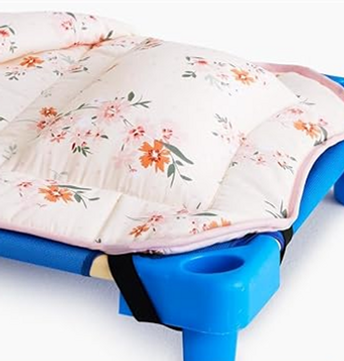
Nap Time
Benefits of Lunch in Early Learning settings:
-
Supports healthy growth and development: Sleep is essential for brain development, memory, and physical growth.
-
Restores energy: A midday nap helps children recharge so they can enjoy the rest of their day with focus and energy.
-
Improves mood and behavior: Well-rested children are more likely to be calm, happy, and able to manage their emotions.
-
Boosts learning and memory: During sleep, the brain processes and stores new information learned during the morning.
-
Promotes self-regulation: Rest time helps children learn to calm their bodies and recognize when they need a break.
-
Establishes healthy sleep habits: A regular nap routine supports good sleep patterns at school and at home.
-
Gives everyone a quiet moment: Nap time creates a peaceful environment where all children can rest or quietly recharge.
-
Prepares them for afternoon activities: After a nap, children are more ready to participate, engage, and have fun.

3:00/4:00 PM
Wake Up/ Table
This is a time for children to wake up at their leisure, put their things away, and get an extra cuddle. Quite table time with workbooks or target skills items will permitted during this time.

4:00 PM
Free Play, Art & Game Time
This is a purely child directed time. They may choose to draw, create a project, bead, play games, do puzzles, get out building boxes, or play with toys. There are so many options to choose from. This would also be a time to do a fun teacher directed activity like a Stem project

4:30 PM
Snack and Clean
This is the time of day that we all get ready to clean the classroom, get ready to go home and prep to go outside soon until the end of the day

5:00 PM
Outside/ Inside Free Play
This time of day is a time of transition. So we enjoy what time we have together outside enjoying and relaxing until the end of the day. We alternatively may be inside playing games or doing art as well.